Player Retention Metrics Tied to Promotional Cycles in Britain's App-Based Casino Market
Iris Richter · Sep 26, 2026
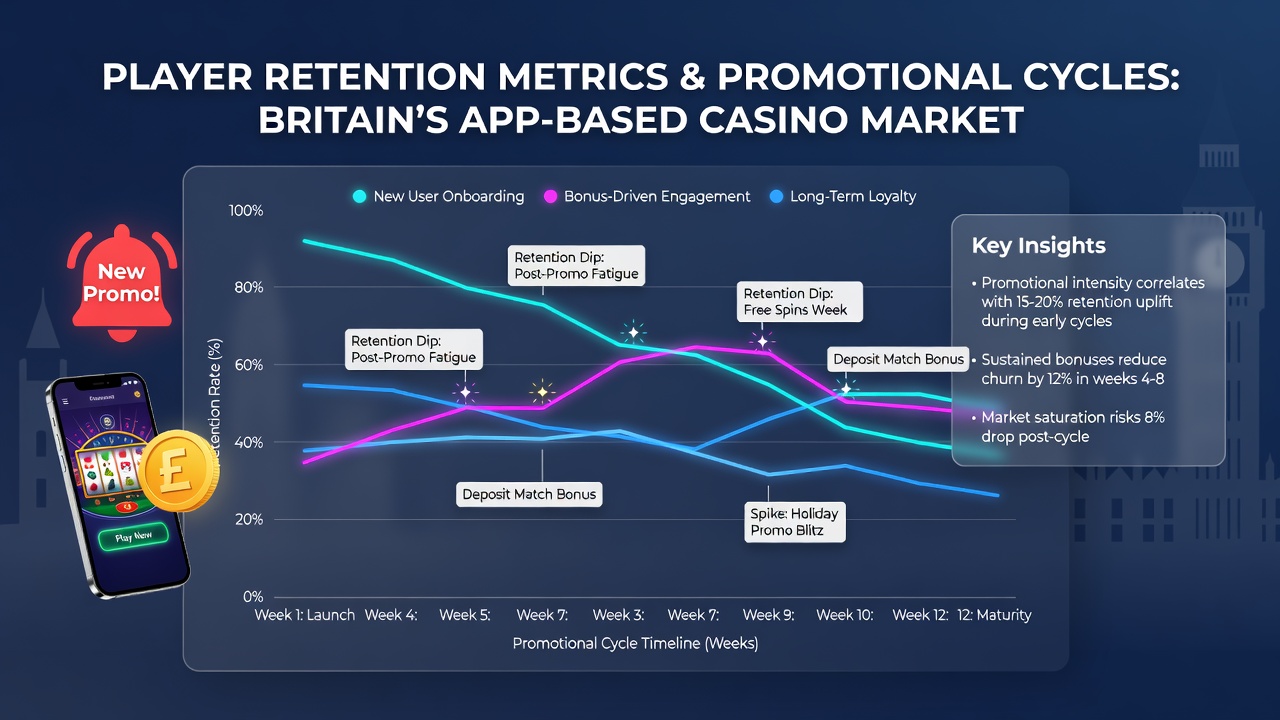
Player Retention Metrics Tied to Promotional Cycles in Britain's App-Based Casino Market
App-based casino platforms across Britain track retention through daily active users, seven-day return rates, and monthly cohort survival curves, with promotional cycles serving as the primary lever that shifts those numbers up or down. Data compiled by industry analysts shows that welcome bonuses and reload offers produce the sharpest spikes in day-one and day-three logins, yet those gains often flatten once the initial incentive expires.
Core Metrics Operators Monitor
Retention teams examine average session length alongside churn probability scores, and they correlate each figure against the timing of free spins, deposit matches, and cashback windows. Figures from multiple platforms reveal that players who redeem a second promotion within fourteen days demonstrate a 28 percent higher likelihood of remaining active at the thirty-day mark compared with those who receive only the opening offer.
How Promotional Timing Shapes Behaviour
Operators segment campaigns into launch bursts, mid-cycle reloads, and end-of-month loyalty drops, each designed to interrupt natural drop-off patterns. Research indicates that shorter bonus validity periods, typically twenty-four to seventy-two hours, generate higher immediate engagement, while extended windows stretching across seven days sustain steadier login habits. In September 2026 several major apps introduced staggered cashback events tied to specific game categories, and early telemetry showed a measurable lift in cross-category play among retained users.
Those who have studied cohort data note that players acquired through affiliate channels respond differently to promotions than organic installs, with the former group requiring more frequent incentives to maintain the same retention curve. Platform dashboards therefore apply separate rulesets, adjusting bonus frequency and value according to acquisition source rather than treating all users identically.
Regional Comparisons and External Benchmarks
Observers compare British patterns with data released by the Canadian Centre for Addiction and Mental Health, which tracks similar promotional effects on retention in provincially regulated markets. Although regulatory frameworks differ, the underlying relationship between incentive timing and session frequency appears consistent across jurisdictions.
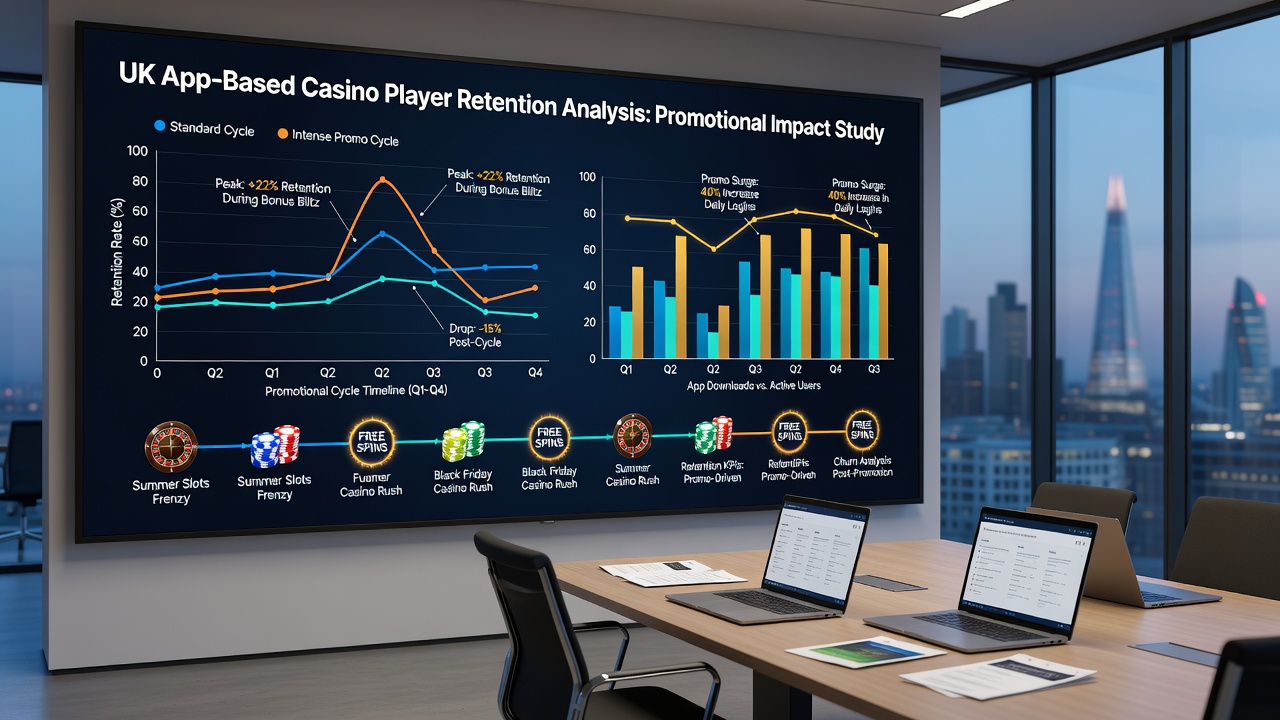
Another reference point comes from a longitudinal study conducted by the Australian Institute of Criminology, which examined how limited-time deposit matches influenced thirty-day retention among smartphone users. The findings align with British observations that front-loaded promotions create rapid uptake followed by steeper attrition once eligibility ends.
App-Specific Mechanics and Measurement Challenges
Push notifications and in-app messaging serve as the delivery system for most promotional triggers, allowing operators to test message timing against retention curves in near real time. Analysts adjust send windows to coincide with peak idle periods identified through historical telemetry, and they measure lift through A/B splits that isolate notification cohorts. Because app stores update their policies periodically, developers must also ensure that promotional deep links remain functional after each operating system release, or risk losing the very sessions the campaigns aim to capture.
Payment method preferences further complicate retention tracking, since users who deposit via digital wallets often complete transactions faster and therefore enter promotional cycles sooner than those relying on bank transfers. Platforms record these differences at the cohort level and apply tailored bonus sequences accordingly, seeking to equalise retention probabilities across funding types.
Conclusion
Retention metrics in Britain's app-based casino sector remain tightly coupled to the structure and cadence of promotional cycles, with operators continuously refining timing, value, and delivery channels to stabilise player cohorts. External benchmarks from Canadian and Australian research institutions provide useful context for interpreting domestic patterns, while app-specific data collection methods allow precise calibration of each campaign element. As measurement techniques evolve, the relationship between incentive design and long-term engagement continues to drive strategic decisions across the market.