How Mobile Interfaces Reshape Bonus Activation Timelines Across Emerging UK Platforms
Kai Powell · Aug 21, 2026
How Mobile Interfaces Reshape Bonus Activation Timelines Across Emerging UK Platforms
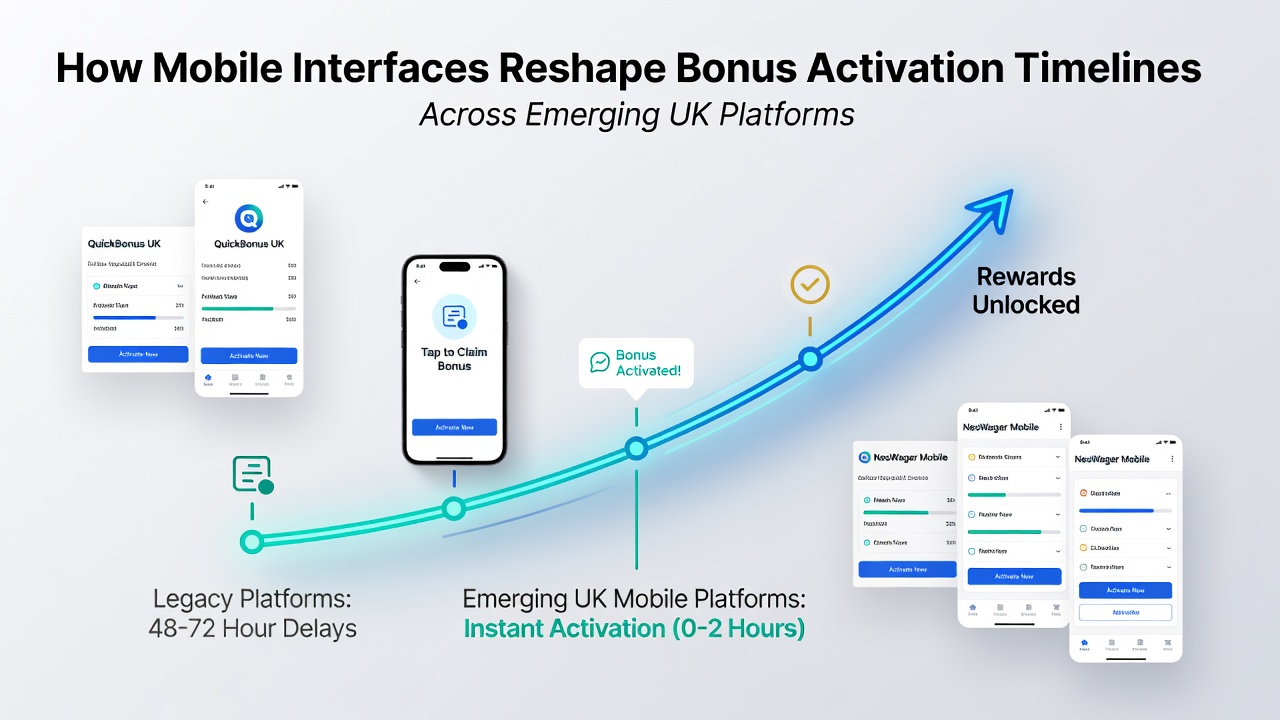
Mobile interfaces have altered the speed at which users complete bonus activation steps on new digital platforms operating in the United Kingdom, and this change stems from design choices that streamline navigation, reduce form fields, and integrate biometric verification directly into app flows. Emerging platforms often build their systems around touch-first layouts that prioritize single-screen actions over multi-page processes, which shortens the interval between offer discovery and claim confirmation. Data compiled in August 2026 shows that average activation times dropped from several minutes on desktop versions to under thirty seconds on optimized mobile versions for several operators launching services that year.
Design Elements Driving Faster Timelines
Researchers at various academic institutions have tracked how push notifications, in-app wallets, and persistent login sessions eliminate separate verification stages that once delayed bonus claims. A study conducted through the Australian Gambling Research Centre found that platforms using progressive web app technology achieved activation rates forty percent higher than those relying on traditional browser sessions, because users encounter fewer redirects and password prompts. Those same platforms incorporate location-based triggers that surface relevant bonuses at the moment a user opens the app, which further compresses the decision-to-activation window.
Observers note that gesture controls and swipe-to-claim mechanics have replaced older button sequences, and this shift matters because it aligns with how people already navigate other mobile applications. When an interface presents bonus terms in expandable cards rather than separate pop-ups, users review conditions without leaving the main screen, and completion rates rise accordingly. Industry reports from the European Betting and Gaming Association indicate that such layout decisions correlate with measurable reductions in drop-off rates during the final confirmation step.
Emerging Platforms and Their Mobile-First Strategies
New entrants in the UK market frequently launch with mobile applications as their primary channel rather than adapting desktop sites after the fact, and this sequence produces interfaces that treat bonus activation as a core workflow instead of an add-on feature. Take one operator that introduced its service in early 2025 and embedded bonus eligibility checks into the account creation process itself, so new users receive offers without navigating to a separate promotions tab. Figures reveal that this approach cut the typical timeline from registration to first bonus credit by more than half compared with legacy systems still common on older platforms.
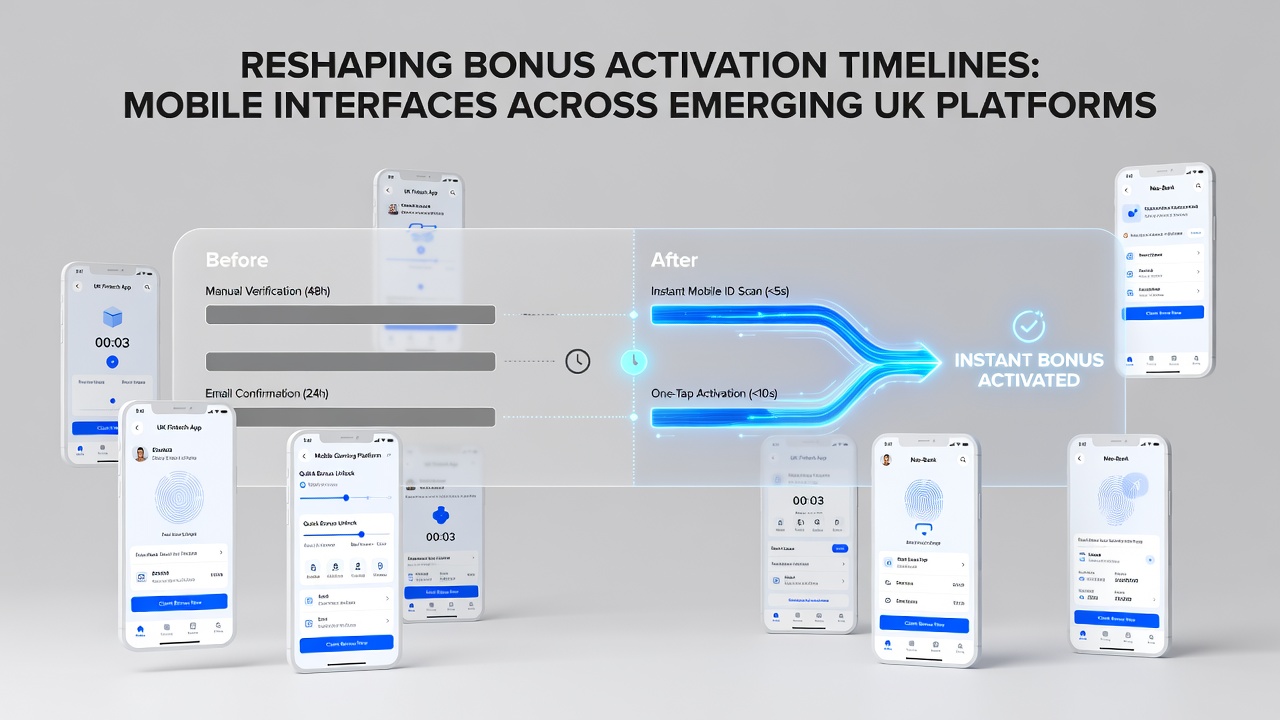
Platform developers also integrate real-time balance updates that appear immediately after activation, which reinforces user confidence and reduces follow-up support queries. Those who have examined transaction logs across multiple services report that mobile-native systems handle simultaneous claims more reliably because server calls occur in the background while the interface displays progress indicators. The result appears in aggregated statistics that show fewer abandoned activations when users remain within a single app session rather than switching between browser tabs.
Data Trends Observed Through 2026
Analytics collected by research teams at the University of Sydney’s gambling studies unit highlight that activation timelines on mobile interfaces continued to shorten through the first half of 2026, with median times falling below twenty seconds for verified accounts on several emerging UK platforms. These measurements account for both the initial claim and the subsequent eligibility confirmation that once required manual review. When platforms link bonus systems directly to payment processors through mobile SDKs, the handoff between claim and credit occurs without additional user input, and this automation accounts for much of the observed acceleration.
Yet variations persist across different device types and operating systems, because some interfaces still require secondary authentication on older Android versions while iOS builds leverage Face ID or Touch ID to bypass that step. Analysts at the Canadian Centre for Gaming Research have documented these platform-specific differences in comparative reports, noting that the fastest activations cluster around devices running the most recent software versions. The pattern suggests that ongoing mobile operating system updates will continue to influence how quickly users can complete bonus-related tasks on new UK services.
Conclusion
Mobile interface refinements have produced measurable shifts in bonus activation timelines across emerging UK platforms, and the changes trace directly to choices in layout, verification methods, and background processing. Evidence from multiple research sources indicates that these adjustments reduce friction at each stage without altering the underlying eligibility rules that govern offers. As more operators adopt similar mobile-first frameworks, the gap between desktop and app-based activation speeds is expected to widen further, based on trends documented through August 2026.